The bathroom sink started draining slowly on a Tuesday, and like most people I pretended not to notice. The water pooled a little around the drain, then went down if I waited. A week later it took a full minute. Two weeks later I was brushing my teeth standing in an inch of gray water, watching it swirl down like it was thinking about it. I knew what the answer was supposed to be, because every store shelf says so: pour in a bottle of drain cleaner, wait, rinse. I did not do that, and I am glad, because the real problem was sitting right under the stopper where no liquid was ever going to reach it properly.
A slow bathroom drain is almost always hair and soap scum, tangled together into a small, unpleasant mat somewhere between the stopper and the trap. It builds up slowly, which is why the drain seems fine until one day it suddenly is not. The good news is that you can clear it with your hands and a couple of simple tools, without pouring anything harsh into your pipes or into the water system. It takes about thirty minutes, and the drain usually runs faster afterward than it has in months.
Before you start, one practical safety note: this job involves dirty water and whatever has been living in your drain. Wear rubber gloves, keep a bucket and old towels nearby, and do not reach into a drain with bare hands if you have any cuts on your fingers. If your sink has a garbage disposal or an electrical connection nearby, that is a different job and a different set of precautions. A plain bathroom sink, though, is one of the most beginner-friendly fixes in the house.
Start with the stopper, not the bottle
Most bathroom sinks have a pop-up stopper, the little plug that goes up and down when you pull the lever behind the faucet. That stopper is the first place hair collects. Lift it out if it pulls free, or unscrew it counterclockwise if it has a threaded post. Some stoppers are held by a pivot rod underneath the sink, in which case you will see a small clip and a rod going into the drain pipe. Squeeze the clip, slide the rod out, and the stopper lifts free from above.
What you find under there is rarely pretty. On my sink, the stopper came out wearing a clump of hair wrapped around its post like a small, soggy bird's nest, coated in gray soap residue. That clump alone was blocking maybe half the drain opening. I pulled it off with a paper towel, wiped the stopper clean with an old rag, and rinsed it in a bucket of hot water. Already the drain looked better, but the water still moved slowly, which told me there was more further down.
Clear the trap by hand first
Under the sink sits the trap, the U-shaped or P-shaped bend in the pipe. Its job is to hold a little water that blocks sewer smells from coming up into the bathroom. It is also where heavier gunk settles. Place your bucket directly under it, put towels on the floor around the bucket, and slowly unscrew the slip nuts on either side of the trap by hand. Most modern traps are plastic and come apart without tools. If yours is older metal and the nuts will not budge, channel-lock pliers with a rag wrapped around the nut will give you grip without chewing up the fitting.
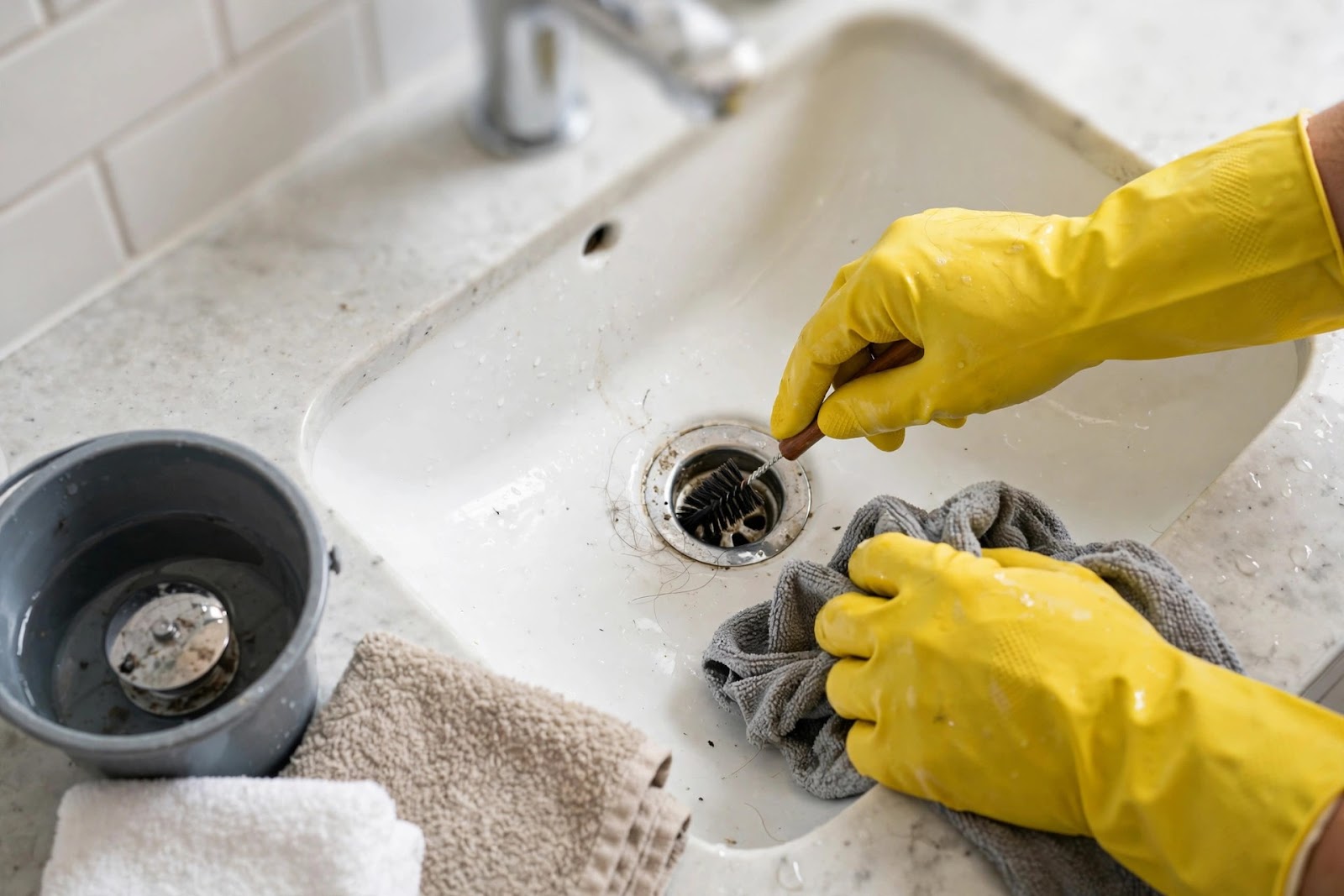
Water will come out. That is normal and it is why the bucket is there. It is usually less than you expect, maybe a cup or two, plus whatever is sitting in the bend. Tip the trap into the bucket and look inside. Mine had a second, smaller mat of hair and a thick layer of soap scum clinging to the curve. I pushed it out with an old toothbrush, rinsed the trap in the bucket, and wiped the inside with a rag. Check the washers on the slip nuts while you have it apart. If one is cracked or flattened, replace it now, while the trap is already off.
Reassemble the trap by hand, snug but not forced. Plastic threads crack if you crank them with pliers. Run the tap for a minute and watch every joint. If it drips, tighten that nut another quarter turn by hand. Do not ignore a small drip: under-sink drips ruin cabinets quietly, over months.
When the clog is deeper: use a drain snake
If the drain is still slow after the stopper and trap are clean, the clog is further down the pipe, past where your fingers can reach. This is where a drain snake, also called a hand auger, earns its keep. A basic 15-foot hand-crank snake is inexpensive, fits in a small box, and is the right tool for a bathroom sink. Do not start with a powered auger. A hand snake gives you feel, and feel matters, because you need to know the difference between the snake hitting a bend and the snake hitting the clog.
Feed the snake into the drain opening slowly, turning the handle clockwise as you push. When you feel resistance, do not shove harder. Crank gently and let the coiled end work into the clog. You will feel it catch, almost like the snake has grabbed something soft. Pull back a little, crank again, then slowly withdraw the snake, keeping a rag in your other hand to wipe it as it comes out. The first time I did this properly, the snake came back with a long strand of hair wrapped around the tip that I swear was longer than my hand. It was disgusting and deeply satisfying in equal measure.
Run hot water for a minute after each pass, then repeat if the flow is still sluggish. Two or three passes usually clear a bathroom sink. If the snake stops at the same spot every time and will not advance no matter how gently you work it, stop. That could be a sharp bend, a damaged pipe section, or a fitting the snake should not be forced past. Forcing it can scratch or puncture a pipe, and that turns a thirty-minute job into a plumber's visit. Knowing when to stop is part of doing the job well.
What not to pour down the drain

This is the part worth being blunt about. Chemical drain cleaners are harsh on pipes, especially older metal ones, and they are harsh on you if they splash. They also rarely dissolve a solid hair mat completely. What they mostly do is eat a small channel through the middle of the clog, so the drain runs a little better for a week and then slows again as soap scum fills the channel back in. You end up buying another bottle, and the cycle repeats while the pipes take the wear.
The same caution applies to home remedies. Baking soda and vinegar fizz nicely, but that fizz does not cut through a tangled hair clog. Hot water helps with soap scum over time, but it will not dissolve hair. Grease and coffee grounds should never go down a bathroom sink, because they coat the pipe and give the next hairball something to stick to.
There is one anecdote that cured me of shortcuts for good. A few years ago, before I knew better, I poured a bottle of drain cleaner into a slow sink, waited the time on the label, and then tried the plunger when nothing improved. The plunger splashed the chemical water up onto my hands and the front of my shirt. Nothing serious happened, I rinsed off right away, but the sting on a small cut on my thumb was enough. The sink still drained slowly. I ended up taking the trap apart anyway, wearing gloves, and pulling out the same hair mat that had been there all along. The bottle had not touched it. Since then, hands and tools first, always.
Keep it flowing after the fix
Once the drain runs clear, a few small habits keep it that way. A mesh drain screen catches most hair before it goes down. Wipe the stopper clean once a month when you are already cleaning the sink, and run hot water for thirty seconds after shaving, so soap residue does not settle in the trap while it is still thick.
Watch for warning signs instead of waiting for standing water. If the drain starts gurgling, if it empties a little slower than last week, or if you catch a faint musty smell from the sink, check the stopper. Nine times out of ten, the early clog is right there and takes two minutes to clear. Catching it early is the difference between a quick wipe and a full trap removal on a busy morning.
A slow drain feels like a big problem when you are standing in gray water, but it is usually a small, reachable blockage and a straightforward fix. Take the stopper out, clean the trap, snake it if you need to, and skip the bottle. My sink has drained fast ever since that first proper clean, and the only thing I buy for it now is a replacement mesh screen every year or so. The water goes down, the sink stays clean, and I never have to pretend not to notice it again.


